Tap to start
NEXT GAME
You might also like
01 / OVERVIEW
About Single-Screen Platform Arcade
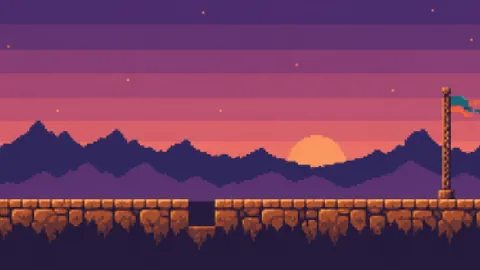
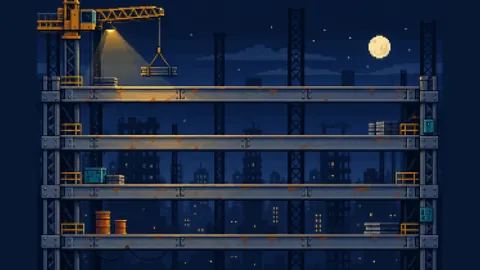
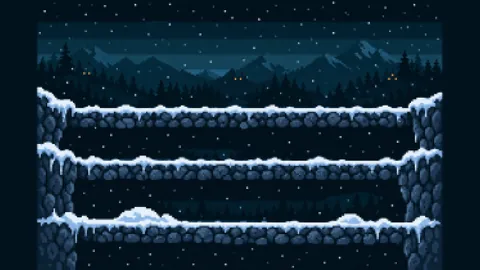
Single-screen platform arcade is an original browser game built for touch. The whole stage is four perforated steel walkways spanning one screen, and the screen never scrolls, so you can always see the entire field. Its attack is neither a stomp nor a punch: you drive your head into the plank above you. What gets struck is the scenery and what gets affected is whatever is standing on that plank, so picking the right column matters more than pressing at the right moment. A hit enemy ends up on its back with a bar above it counting down to the moment it gets up; walk into it while it is down and it is kicked away, sliding along the walkway and taking everything in its path with it — the longer the chain, the bigger the score. The bottom walkway has nothing beneath it to hit, so the yellow-and-black shaker plate in the middle of it is its only way to flip anything — three uses per wave. Clear a wave to move on, and every third wave is a 20 second pickup wave with no enemies. Touch an enemy that has not flipped and you lose a life and restart the wave; three lives and the run is over. The scoring leans the same way the action does: a flip is worth 50, a kick scores 800 per chain level, the shaker plate scores 1000 per use, a washer 100, and clearing a combat wave adds 200 for every plate use you did not spend. Difficulty tightens along three axes at once — total enemy count, enemy speed, and the window you get to kick — and all three top out on the eighth combat wave; after that the waves only change the hatch order and the starting stances.
There was always a lit screen on the counter of the little shop by the school gate, a few kids taking turns, a few coins a go. Those games never scrolled — one screen was the whole battlefield: a few horizontal ledges, a few small things walking slowly toward you, and one hit from underneath put the one above you on its back. This game puts that afternoon at the counter into a browser: still one screen with the whole field in view, still a hit from below, still a run across to finish the job — only the coin is now a tap on your phone.
02 / HOW TO PLAY
How to play Single-Screen Platform Arcade
- 01
Tap the picture to start; there is nothing to read first. You begin on the rightmost tile of the third walkway's left run, with the second walkway's plank directly overhead.
- 02
Push the band along the bottom of the screen to move: the left half walks left, the right half walks right, and the centre is a dead zone where you stand still. Lifting your thumb also stops you, but friction slides you a little further first, so lift early.
- 03
Tap the jump key in the bottom right. Jump height is fixed — whether you hit the plank above or land on top of it depends entirely on which column you are standing in, not on how long you hold.
- 04
Once an enemy is hit it flips onto its back, and the bar above it is how long you have before it stands up. The flip itself pays 50. When the tail of the bar starts flashing and changing colour, it is about to get up.
- 05
Walk into it while it is still down and it gets kicked away: it slides along the walkway and takes whatever it hits with it. The chain caps at five and the score runs 800 per chain level — kicking a row away is worth far more than kicking one.
- 06
The bottom walkway cannot hit anything, so the yellow-and-black shaker plate in its middle is its only way to flip: jump into it from below and everything standing on the field flips over. It pays 1000 per use, three uses per wave, refilled at the start of the next one.
- 07
Every enemy you knock over drops a washer worth 100; walk over it to collect it, and it expires if you leave it. Clear a wave to move on, and every third wave is a 20 second pickup wave with no enemies that scatters 8 washers.
- 08
On a keyboard: left and right arrows move, Space or Up jumps, P or Esc pauses, M mutes, Enter starts.
03 / RULES
Single-Screen Platform Arcade rules
The stage is four steel walkways spanning the screen at a fixed spacing; the picture never scrolls and the layout never changes. Jump into the plank above you and any enemy standing on it within three tiles of the impact flips over — it is a local range rather than the whole run, so the far end of the same run stays on its feet. A treadshell flips on one hit; a pincer only gets angry on the first and also speeds up, and flips on the second; a hoverfly can only be hit the half of the time it is down on a plank. Walk into a flipped enemy to kick it away — it costs no key. What you kick slides along the walkway and takes everything in its path with it, up to a chain of five. A flipped enemy gets back up and comes back faster, but only once and with a cap; once up it is a whole enemy again and can be flipped again and again. The shaker plate in the middle of the bottom walkway flips everything standing on the field in one hit, three times per wave, refilled at the start of each wave. Every removal drops a washer you collect by walking over it, and it expires. Clear a wave to move on; every third wave is a 20 second pickup wave with no enemies that scatters 8 washers. Touch an enemy that has not flipped and you lose a life and restart that wave with your score intact; three lives and the run settles, and there is no extra life to earn. Score comes from four places: 50 for a flip, 800 per chain level for a kick, 1000 per shaker plate use (per use, not per enemy flipped), and 100 for a washer; clearing a combat wave adds 200 for every plate use left unspent, and the score is clamped at 999990. Difficulty moves along three axes only: total enemy count climbs from 2 to 9, enemy movement speed doubles, and the window to land the follow-up kick tightens from 5 seconds to just under 4. All three top out on the eighth combat wave; every wave after that reuses that row, and the only difference between waves is the hatch order and the starting stances.
04 / STRATEGY
Single-Screen Platform Arcade strategy tips
Positioning beats reflexes here: jump height is fixed, the hit forgives three tiles either side of the impact, and lifting your thumb still slides you a little — so stopping cleanly before you tap jump lands far more hits than pressing on the move. The countdown bar is the thing to watch. It tells you how long that enemy has left, and the flashing tail means 'kick it now or the hit was wasted'. Look at the direction before you kick. What you kick slides along the walkway taking everything in its path, so walking around to the outside of a row and kicking inwards clears the row in one go; kicking from the middle clears half of it. Almost all of the score sits in the chain: a flip pays 50 while a single chain level of kick pays 800, and that sixteen-to-one gap is the whole point — the flip is the process, the kick is the result. But the chain caps at five, so nine enemies lined up and taken in one slide still only pay 800×35 = 28000 — saving the last enemy for a perfect chain does not pay. A reliable chain of three or four is worth more than a maximal one. The shaker plate is worth a lot and there is very little of it: wait until most of the enemies have come down to the bottom walkway and no hoverfly is airborne, and one hit clears the whole layer. It pays 1000 per use rather than per enemy flipped, so its value is in the kicks that follow, not in the hit itself. Being chased is not a problem — at full speed you are faster than any enemy, and the left and right edges connect, so walking around is always an exit.
05 / FAQ
Single-Screen Platform Arcade FAQ
- How do you play a single-screen platform arcade on a phone?
- Push the band along the bottom of the screen to move — the left half walks left, the right half walks right, and the centre dead zone holds you still — then tap the jump key in the bottom right. One thumb is enough for everything: to jump while running, push the band, let go, and tap jump straight away; you fly off in the direction you were just heading, exactly as if two thumbs had pressed together. Kicking has no button at all — you trigger it by walking into a flipped enemy.
- How do you flip the enemies in this game?
- You drive your head into the plank above you. Any enemy standing on that plank within three tiles of the impact flips over — a local range rather than the whole run, so the one at the far end of the same run stays on its feet. Three things matter: the tile directly above your head has to be solid or nothing happens at all; the enemy has to be standing on a plank, because anything airborne or falling will not flip; and the bottom walkway has nothing beneath it to hit, so down there the shaker plate is the only option.
- Why do you have to run over and kick after flipping an enemy?
- Flipping is the process and pays 50; the kick is the result and pays 800 per chain level. A flipped enemy carries a countdown bar, and when it runs out the enemy gets up again and comes back faster — and once up it is a whole enemy again that you can flip again and again. Walk into it while it is still down and it is kicked away, sliding along the walkway and taking everything in its path with it. The chain caps at five and the score scales with it, so kicking a row is worth far more than kicking one.
- What is the shaker plate and why only three uses a wave?
- It is the yellow-and-black tile in the middle of the bottom walkway. Jump into it from below and every enemy standing on the field flips over; it pays 1000 per use and you get three uses per wave, refilled at the start of each one. It exists because the bottom walkway has nothing beneath it to hit, and enemies all end up down there — without the plate there would be no way to flip them. Limiting it makes it a decision rather than a button: hit it early and you only flip the few still up on the higher walkways, which you cannot reach before they stand up again. Wait until most of them are down and no hoverfly is airborne, and one hit clears the layer.
- What enemies are there and how do you deal with each?
- Three. The treadshell flips on a single hit and is the baseline. The pincer takes two: the first only angers it — the claws open and it speeds up — so one enemy needs two correct stances. The hoverfly spends half its time on the plank and half in the air, and only the half on the plank can be hit; while airborne even the shaker plate misses it. Any flipped enemy also comes back faster once it gets up, but only once and with a cap, so it can never catch you at full walking speed.
- How long is a run, and do you start over when you die?
- Touching an enemy that has not flipped costs a life, but it does not send you back to the beginning: you restart that wave with your score intact, the shaker plate refilled and a stretch of invulnerability. Only when all three lives are gone does the run settle, and the settlement shows the run's score, the wave you reached and the best score on this machine. Clearing a wave moves you on, and every third wave is a 20 second pickup wave with no enemies, so the rhythm alternates between pressure and breathing room. Difficulty tops out on the eighth combat wave, and after that the waves only change the hatch order and the stances, so how long a run lasts comes down to how many lives you have left.
- How does scoring work, and what is a kicked row worth?
- A flip pays 50, a kick pays 800 per chain level, the shaker plate pays 1000 per use, a washer pays 100, and clearing a combat wave adds 200 for every plate use you left unspent. So the score is almost entirely about the chain on the follow-up kick. Played straight, the first combat wave — flip both enemies, kick one on its own, let the slider take the other, collect both washers, never touch the plate — comes to 3300. The plate-first line — hit the plate to flip a group of four on the bottom walkway, then kick one so the slide takes the other three — pays 9800. The chain caps at five, so nine enemies in a line taken in one slide pay 800×35 = 28000. The score is clamped at 999990: past that it stops rising, and it never wraps or goes negative.
- What kind of game is this, and how is it different from stomping platformers?
- It belongs to the single-screen branch of platform games: one screen is the whole battlefield, there is no camera follow and no next-level terrain. The biggest difference from the stomping kind is the action itself — you strike the scenery rather than the enemy. What you hit is the plank above your head, and what it affects is whatever stands on it. That is why the skill here is all positioning: jump height is fixed, and whether you hit the plank above or land on it depends only on the column you are standing in.