02 / BACKSTORY
Under the desk, in a school bag, and on the first phone that played anything
The handheld batch was shaped by its screen: few cells, few colours, few buttons, so a game had to explain itself in one view and had to survive being interrupted — the bell rings and it goes back in the bag. That is exactly what a phone needs today, so this is the era we build most carefully: portrait first, one hand, control keys grouped by thumb reach, the high-risk key kept away from the direction keys, and a run you can finish in three to five minutes.
- What games were on handhelds and early phones?
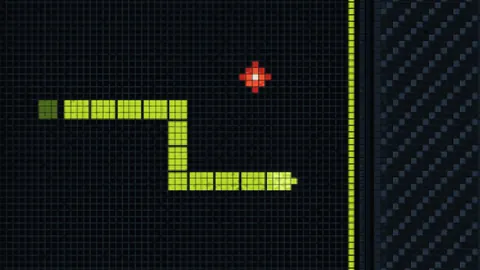
- Mostly block clearing, snake, light-sequence memory and paint-by-number grids. They share one small screen, a rule you can state in a sentence, and the ability to stop at any moment — which is how they fitted onto a handheld in the first place.
- What is the falling block game from those days called, and can you play it in a browser?
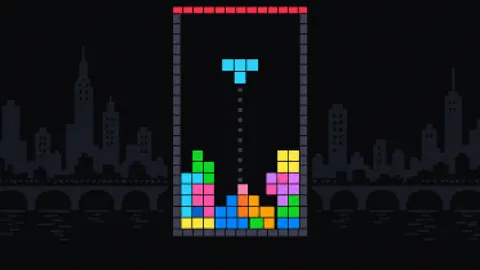
- The genre name is block clearing, or falling block puzzle: seven four-cell shapes drop from the top, you slide and turn them into the stack, and filling a whole row across clears it. Falling Blocks here is an original browser version of that core loop.
- Can you play these one-handed on a phone?
- This era is built for exactly that. Control keys sit under the play area inside natural thumb reach, touch keys are at least 44 pixels, and the key most likely to be hit by mistake is kept apart from the direction keys. No landscape and no keyboard needed.