2 games
Paddle & Ball
Brick breaking, pool and pinball — one ball's physics is enough to carry a whole game.

01 / GAME SELECT
Paddle & Ball
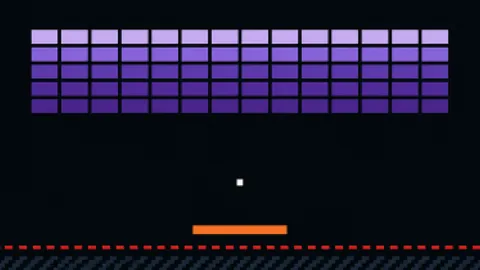
Brick Breaker
Play brick breaker online: hold and drag to move the paddle, lift your finger to serve, and clear the whole wall to finish the level. The paddle is cut into six segments and the one you catch with decides where the ball goes.
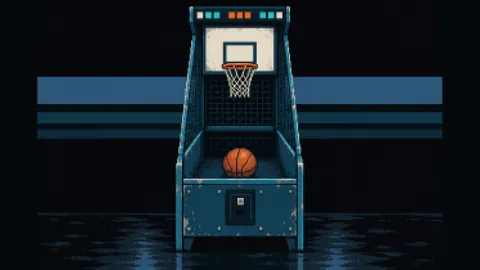
Arcade Basket
Arcade Basket is an online hoop shooter: the rim and backboard slide left and right above the cabinet, and once the difficulty climbs they bob up and down as well. Pull down on the pad below and let go — the ball flies opposite the way you pulled, and the longer the pull the harder the throw. When you miss it does not just say "unlucky": it tells you whether the ball was too light, too hard, or wide. One hand on a phone, arrow keys and Space on a desktop.
02 / FAQ
FAQ
- What is the game where you bounce a ball to break bricks?
- That is a brick breaker, the paddle-and-ball classic. Anything where a bat keeps one ball in play belongs to the family: brick walls, table pool, pinball. The rules are trivial and all the depth hides in the rebound angle.
- How do you control the angle of the ball with a paddle?
- Where the ball lands on the paddle sets the angle. Catch it dead centre and it comes straight back; the further out toward the edge, the sharper the deflection. Use the corner of the bat to reach bricks stacked in the corners, and the middle when you want to settle the rally down.
- What is the difference between brick breaker and pinball?
- One clears a wall; the other keeps the ball alive. A brick breaker has a target and therefore an end — the round finishes when the wall is gone. A pinball table is an endurance test where the score is how long you can keep the ball off the drain.
- How do you play paddle games on a touchscreen?
- Drag with a finger below the paddle instead of tapping where the ball will land. Dragging is continuous input and tapping is discrete, and once the ball speeds up only continuous input keeps pace. Keeping the finger low also stops your hand covering the play field.